


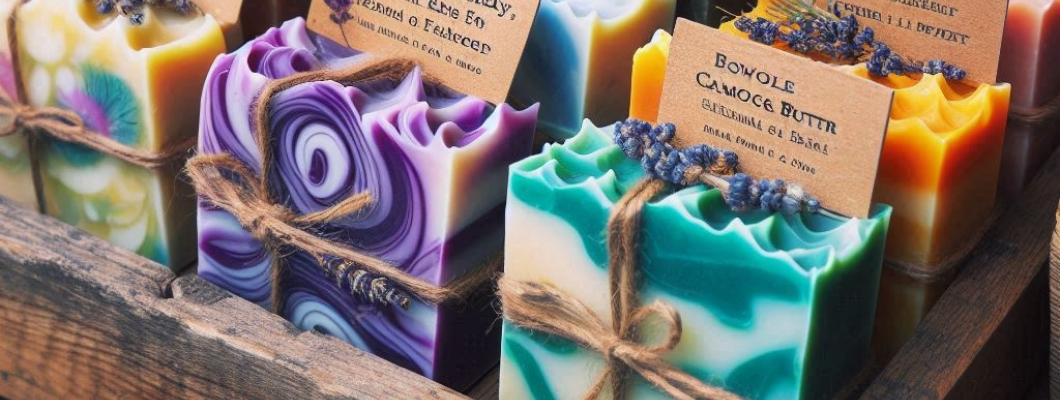
What is an Artisanal Soap?
An "Artisanal Soap" is a handmade soap with added value from the use of natural elements, time, and effort.
These soaps are characterized by their soft, natural aromas and their authentic shapes. They are almost always made with vegetable oil bases, rich in antioxidants, vitamins, and nutrients essential for healthy skin.
Everyone desires beautiful and healthy skin, and the daily use of artisanal soaps is highly recommended to achieve this.
Glycerin
Glycerin is a clear, viscous liquid obtained by hydrolysis of mixed fats and oils and produced as a by-product in soap manufacturing.
Used as an emollient in many skin preparations, it is used in the preparation of natural soaps because of its ability to absorb moisture from the air and because it is effective for all skin types.
Glycerin soap is a soap whose base consists of glycerin. In addition to glycerin, natural colorants and flavorings are generally used to give it color and a natural scent.
Handmade soap bars keep all the good stuff including glycerin and oils which leads to moisturize your skin naturally. There are also other chemicals or chemical preservatives added to create colors, smell and longevity.
You will not find things such as parabens (related to breast cancer), sodium lauryl sulfate (skin irritant) in natural soap. But that you can find in almost all commercially produced bars of soap.
Vegetable Oils
Vegetable Oils are substances extracted from the oleaginous fruits of some plants. They are rich in vitamins, minerals and polyunsaturated fatty acids that provide an extraordinary supply of nutrients to the skin.
Vegetable oils in cosmetics have been used throughout the history of mankind, not only for their nutritional contribution to the diet but also for their properties to keep the skin in good condition and prevent premature aging thanks to their exceptional qualities to moisturize, nourish and regenerate the skin.
The advantages of using vegetable oils as moisturizing and nourishing products are many, and in a short time evident results are observed. These oils are rich in nutrients that are essential for skin and cell regeneration.
Essential Oils
An Essential Oil is a fragrant liquid that is extracted from certain plants by steaming or pressing and contains natural chemicals that give the plants their “essence” (specific odor and flavor).
Essential oils are used in perfumes, food flavorings, medicines and aromatherapy.
All are, to a greater or lesser degree:
- Antibiotics
- Cellular regenerators
- Antiseptics
- Immune-stimulating
- Antiviral
- Anti-inflammatory
Among many advantages, we highlight the improvement of blood and lymphatic circulation, and the balance of emotions.
Aromatic Essence
The Aromatic Essence is a mixture of aromatic substances of natural origin and synthetic substances that recreate all the aromas you can imagine.
Unlike essential oils, aromatic essences do not contain cosmetic active ingredients, so they do not add any properties to our preparations.
The only purpose of an aromatic essence is to perfume.
Colorant
Colorant is a generic term used for any chemical substance capable of producing a wide range of dyes, used to color products in the textile, cosmetics and food industries.
- Natural Colorants: The terms natural colorants and natural dyes refer to colorants or dyes derived from plants, invertebrates or minerals. Most natural dyes are vegetable dyes derived from plants (roots, berries, bark, leaves and wood), and other organic sources such as fungi and lichens.
- Artificial Colorants: Most of these products are soluble in water, so their use, as well as their manufacture, is cheaper, easier and faster than colorants of natural origin. They can be found in the form of sodium salts, liquids and pasty materials. They are also used in the form of insoluble lacquers for solid products, preventing them from fading, such as some sweets. The advantages they have over natural dyes, besides being cheaper, easier to produce and use, is that they are more resistant to heat treatments. For this reason they can be used in products that must be heated or cooked before packaging, they have greater resistance to light.
To learn more, explore the other articles available on our website.
Enjoy and discover valuable information for your well-being.
